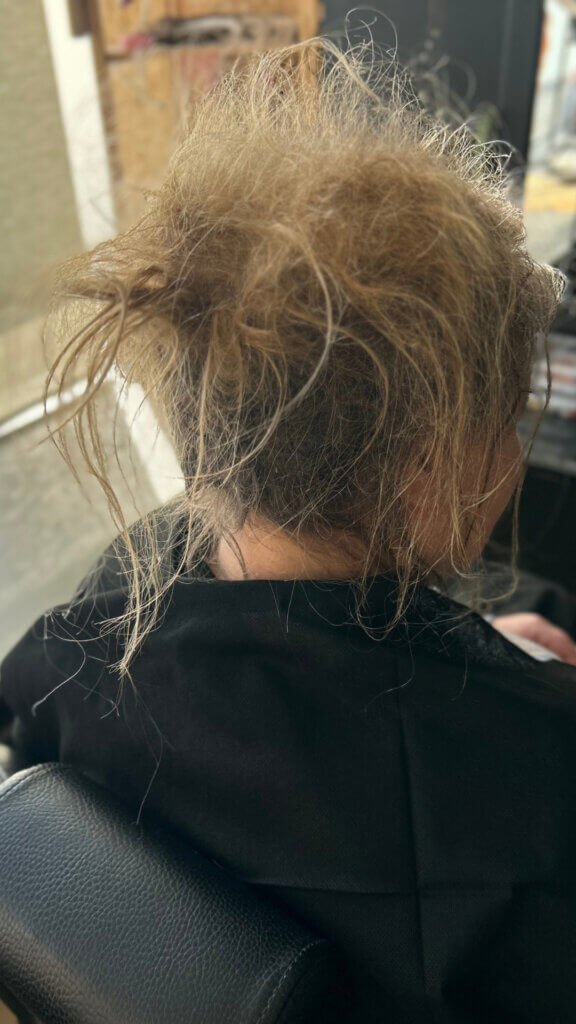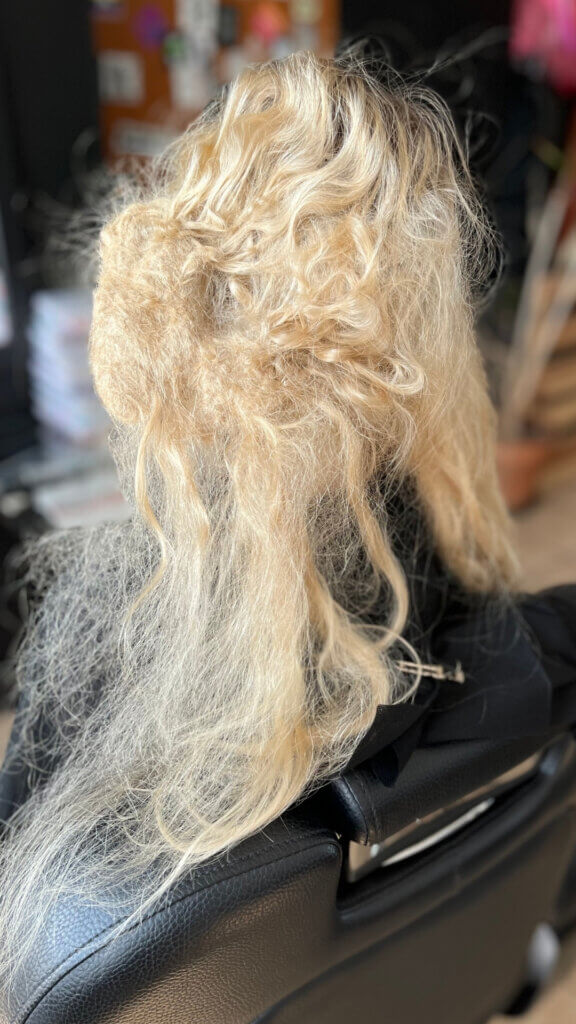
How do you detangle a mat? Start by calmly assessing the tangles and gently separating small sections from the ends. Do not pull on the whole mass of hair. If the mat is hard, sits close to your scalp or hurts to detangle, stop trying on your own and talk to a salon about what to do next. In this guide, we explain how we approach severely matted hair.
How much does detangling matted hair cost?
PLN 260 per hour of work. Large, tightly compacted mats can take 5 to 10 hours, sometimes over more than one appointment. At 5 to 10 hours, the cost would be PLN 1,300 to 2,600. This is an example calculation, not a guaranteed duration or a fixed quote.
First, we look at your hair and agree on a plan. For an initial quote, send photos from several angles, tell us how long your hair has been tangled and what has already been used on it. You do not have to explain or justify the state of your hair.
Matted hair can be frustrating. Sometimes it starts with a few small knots, then turns into a tight mass of hair and you have no idea where to begin. I will walk you through what we look at in the salon, how we work with severe tangles and what to avoid so you do not make things harder for yourself.
What is a mat, and how does it form?
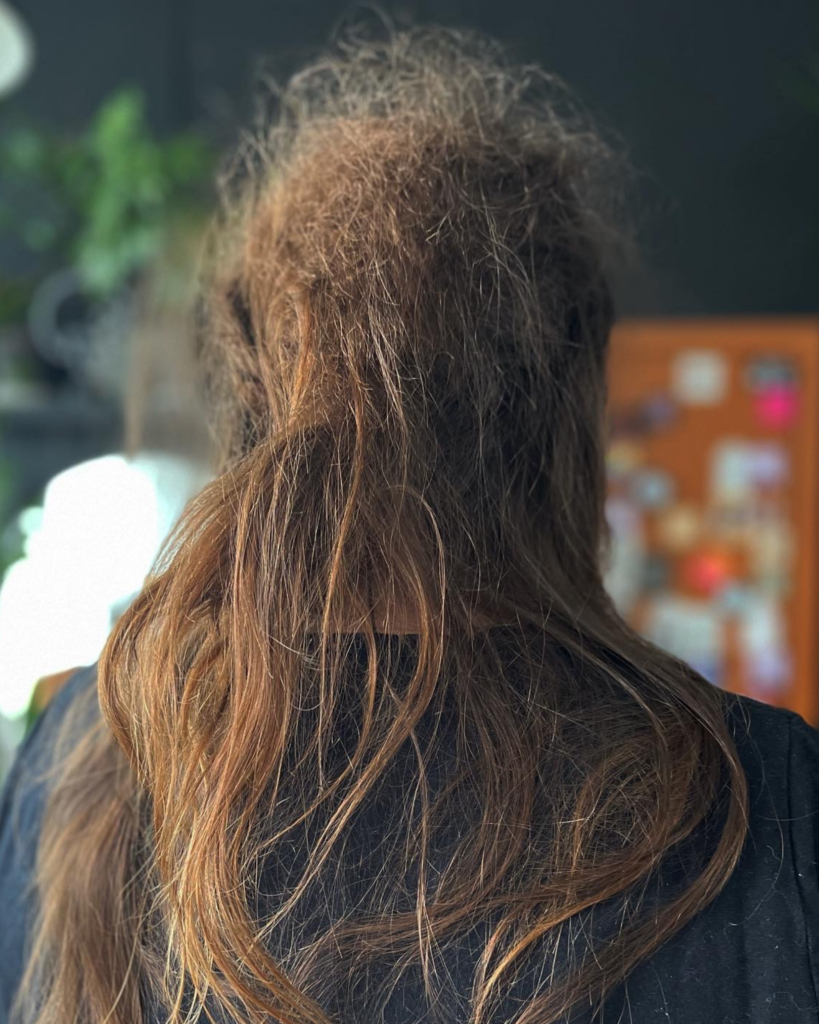
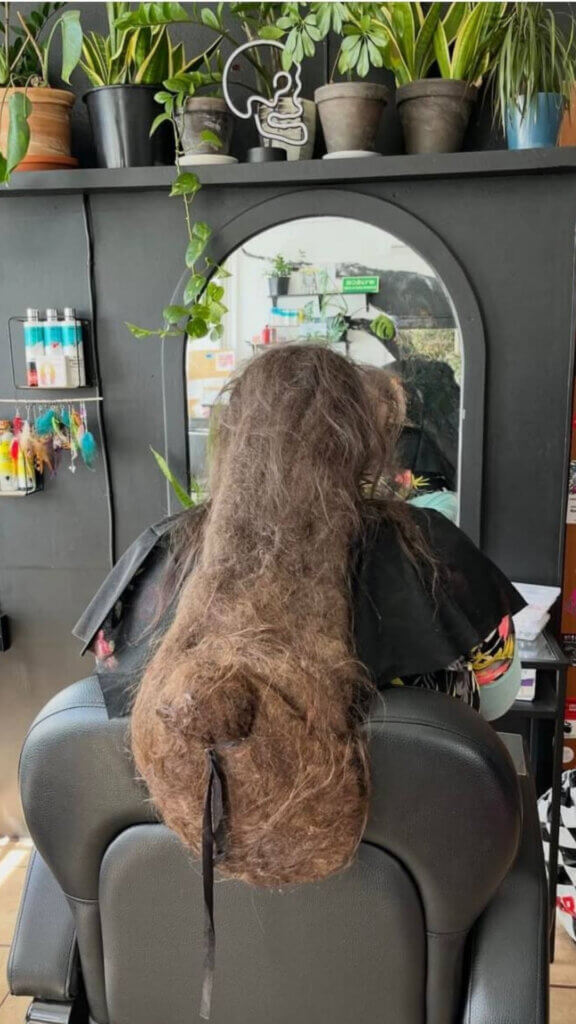
A mat is a compact, tangled mass of hair that is difficult to separate with your fingers or a comb. It can affect a small area or cover almost the whole head. Size alone does not tell us how long detangling will take. Tightness, position and the condition of the hair matter too.
Hair structure and its tendency to mat
Each hair has an outer layer of scales, a little like roof tiles. Rough or damaged hairs can catch on each other more easily. That is why we also ask about previous bleaching, colouring and care.
Things that can contribute to tangling include:
- Dry, rough hair: hairs can catch on each other more easily as they rub together
- Curly or wavy hair: individual sections can catch on each other
- Hair styled for an occasion: more hairspray and backcombing can mean a larger mass of hair to tangle
- A brushing method that does not suit your hair: especially forcing a brush through resistance and pulling on the whole tangled area
- Friction against the hair
Types of matting: they are not all the same
At the salon, we describe three situations to make the conversation easier. This is our practical way of grouping them, not a medical diagnosis:
- Surface matting: a relatively shallow mat in the outer layer of the hair. Sometimes gently separating small sections is enough.
- Deep matting, like a nest within the hair: a tight mass within the hair, sometimes hidden beneath a layer that looks fine. It needs a calm assessment, with work starting on small areas that can be reached.
- Tangling after chemical treatments: hair that has been bleached or coloured needs its condition assessed. Sometimes a localised cut is necessary; knowing which treatment was used does not tell us the outcome on its own.
We have a simple way to describe a mat before your appointment. The two most useful things to tell us are:
- how hard the mat is on our scale of 0 to 5 (5 is solid rock)
- how much hair is tangled: sometimes the mat affects only part of it, sometimes all of it
Then we ask:
- how long your hair has been like this
- what has been used so far: products, brushes, combs and previous attempts at detangling
Why hair becomes matted
We hear all kinds of stories when we talk before an appointment. We do not ask so we can judge. We want to understand how to work with your hair and what you need:
- Children’s hair: tangling, not wanting to have it brushed, or difficulty finding a daily care routine that works.
- Depression, or a time when you do not have the energy to brush your hair: the hair goes up in a bun and you think, “I will brush it out tomorrow.” And tomorrow never comes. Sometimes it goes on for months, sometimes years. You can come to us then, too.
- Spending a long time lying down, with limited ability to care for your hair
- A hospital stay or recovery after surgery: when brushing your own hair is difficult.
- Occasion hairstyles: backcombing and hairspray can leave hair badly tangled. If a tight mat remains after taking the style down, do not keep trying more treatments without knowing what you are dealing with. Show us your hair first.
- Medical treatment and changes in the condition of your hair: tell us about them before your appointment, especially if your scalp is sensitive.
- Tangling after head lice treatment: tell us which products were used and what your scalp is like now.
How do you detangle a mat?
Step by step: how we work at the salon
Before you reach for a comb, READ THIS CAREFULLY. With a tightly compacted mat, patience, small sections and being able to stop matter more than force. If it pulls on your scalp, the hair starts breaking or you feel pain, stop.
Step 1: Absolutely do not ask chatu4PT about this
Unfortunately, chatbots can repeat advice that does not fit a tightly compacted mat. They cannot see your hair or assess how tightly the mat sits against your scalp. Before trying another tip from the internet, show your hair to someone who works with this kind of matting.
STEP 2: TIGHT MATTING: WE START DRY AT THE SALON
At the salon, we begin work on tightly compacted mats with an assessment and gentle loosening on dry hair. Get in touch before your visit, before washing your hair or applying more products. This lets us:
- assess which small sections can be separated without pulling on your scalp
- see the structure of the matting
- separate the hair with our fingers
What does working on dry hair look like?
First, we gently loosen the mat with our fingers, separating it into smaller areas. Then we very slowly work the hair apart, starting from the ends we can reach. We choose the tools and approach after assessing the hair. Do not use a needle or another sharp tool near your scalp.
Does that mean we brush all hair dry?
No. We are talking about a tightly compacted mass of hair and preparing to work on it at our salon. Everyday detangling of curls and small knots is a different situation; the brushing method and use of water or conditioner depend on the type and condition of the hair. If you are not sure what you are dealing with, send photos before trying again.
STEP 3: ABSOLUTELY DO NOT DO THIS
DO NOT KEEP ADDING OILS AND PRODUCTS WITHOUT KNOWING WHAT IS NEEDED: especially cooking oil or mixtures of several products. Tell us what is already on your hair. After assessing it, we will agree on preparation and the care it will need afterwards.
DO NOT TRY TO DETANGLE THE WHOLE HEAD AT ONCE: divide the work into stages and take breaks.
DO NOT BE TOO FORCEFUL: do not try to overcome resistance with force. If you are struggling with a mat, write to us. We will help without judging, whatever condition your hair is in. First, we will assess how much we can keep.
Step 4: Always work from the ends, never from the roots
We do not start by dragging a brush from the roots through the whole tangled length.
Start at the ends (the bottom of your hair), then gradually work up towards the roots (at the scalp). Why? Starting at the top pushes all the tangles down, building up the problem instead of solving it. Working from the bottom means that each small area you free reduces the resistance below it.
For very severe matting, book an assessment first. Do not try to put sharp tools under tightly matted hair or cut sections out close to the scalp. If your scalp is sore, has wounds or there is noticeable thinning, you also need to consult a dermatologist.
Special cases: when the usual methods are not enough
When a mat cannot be untangled
Sometimes, despite every effort, a mat is so tight and extensive that we need a compromise. This is not a failure: it is a decision to protect the rest of the hair from further damage. We assess how much can be kept and whether a localised cut is needed. We discuss the scope of the work before we start.
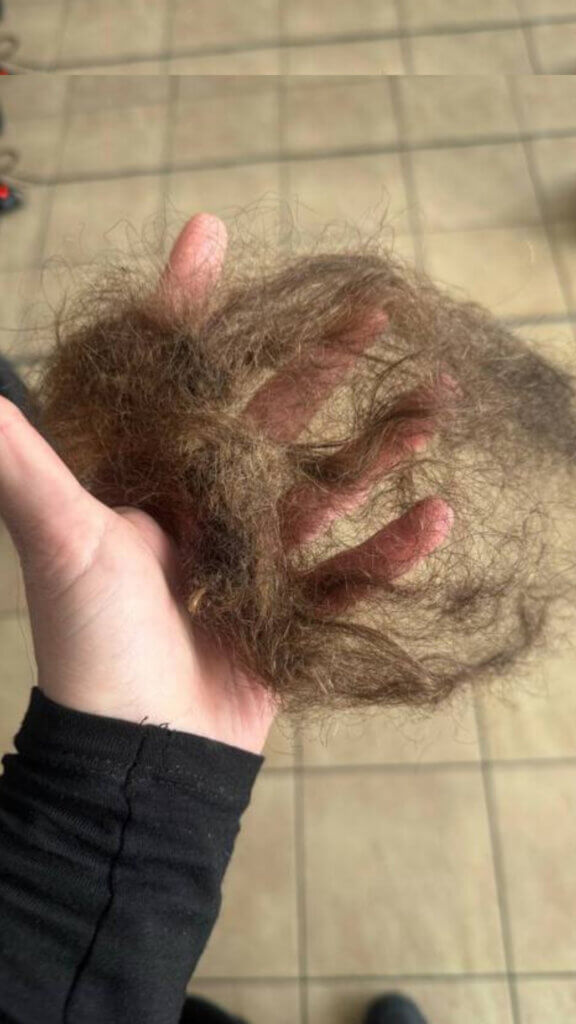
Detangling can also release hairs that had already shed and stayed trapped in the mat. The ball of hair alone does not tell you how much was pulled out during the work. We do not promise to preserve the full length before seeing your hair.
Professional mat detangling in Warsaw
Struggling with a mat, or is a large part of your hair tangled? At FREAK SALON, at Kijowska 11 in Warsaw, we help detangle severely matted hair. We start by assessing the hair, without judging you. What we can detangle, how long it may take and how much work is needed depend on the individual case.
For an initial quote, send photos of the mat from several angles. Tell us how long your hair has been tangled and what was used during previous attempts. Book a consultation before mat detangling. We cannot guarantee keeping the full length; we will discuss what is possible before we begin.
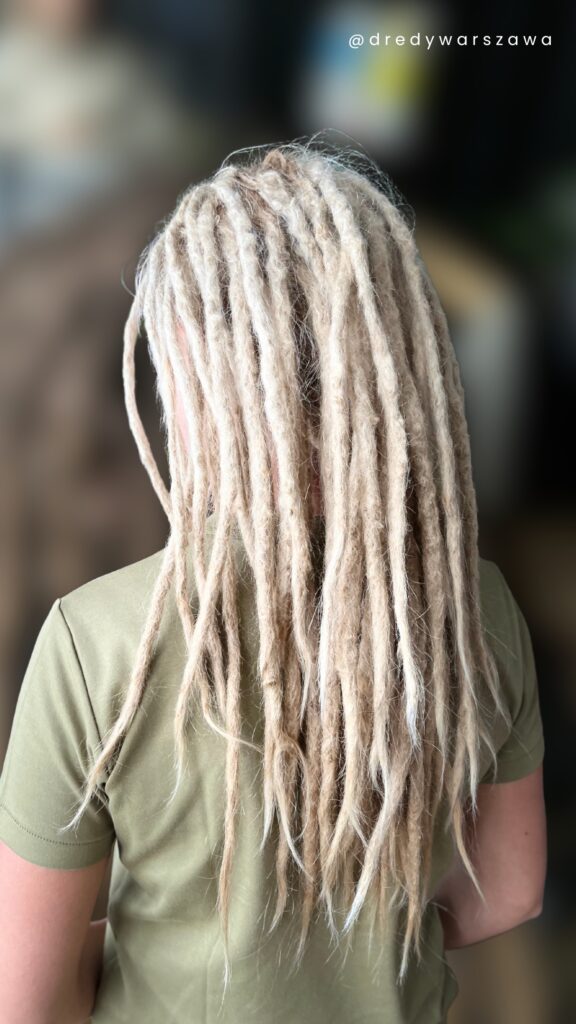
More questions about changing your hairstyle? Have a look at the FREAK SALON FAQ and our guide to combing out dreadlocks without cutting.
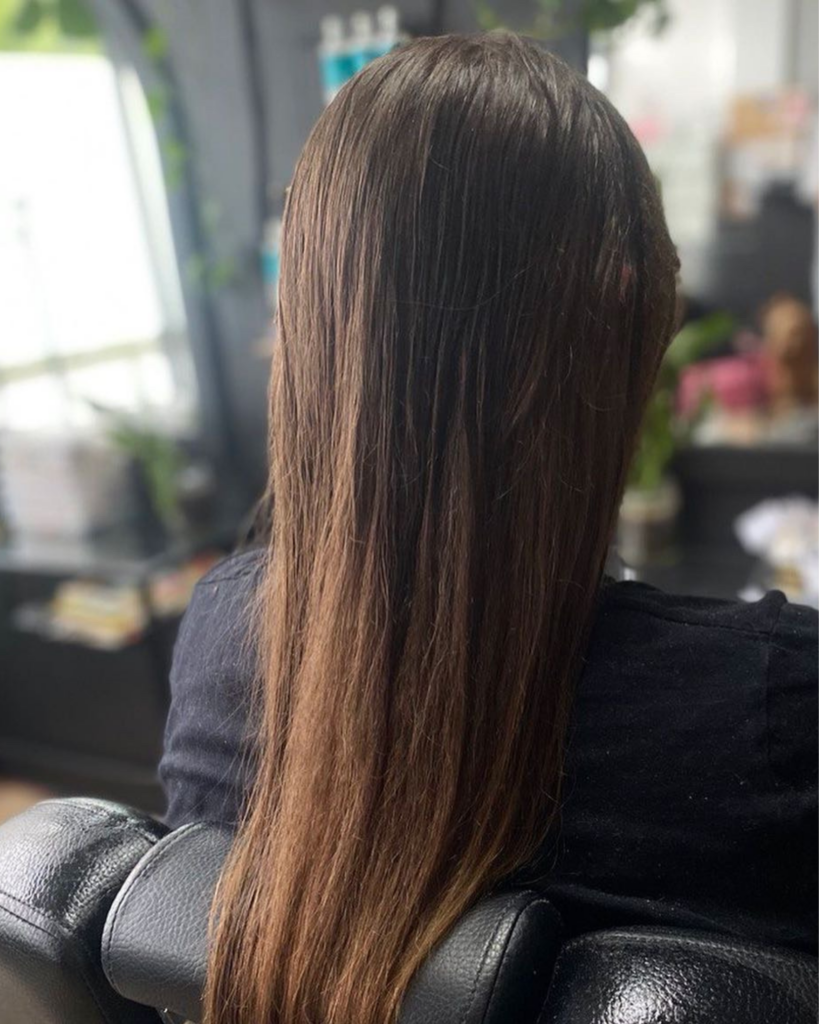
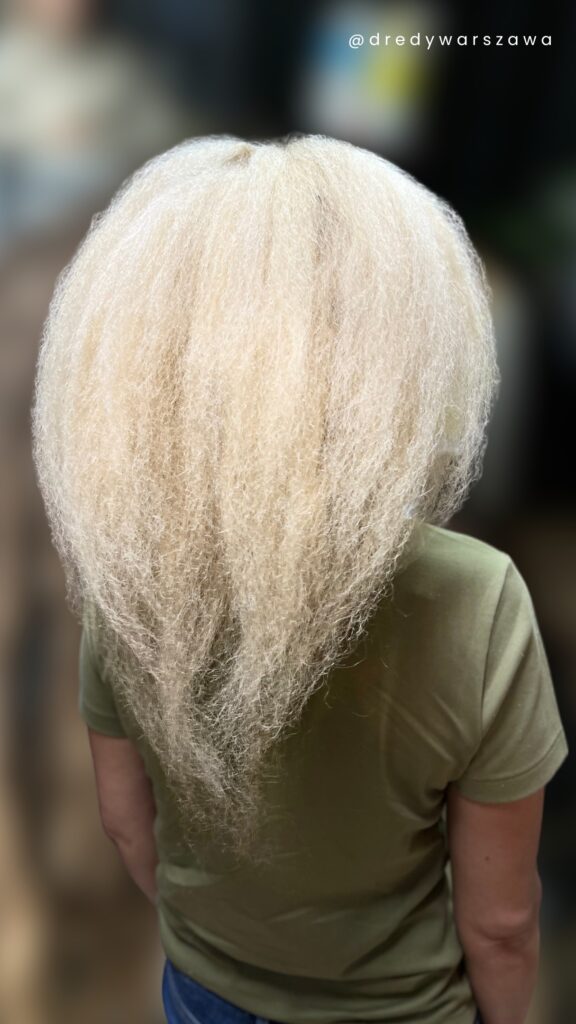
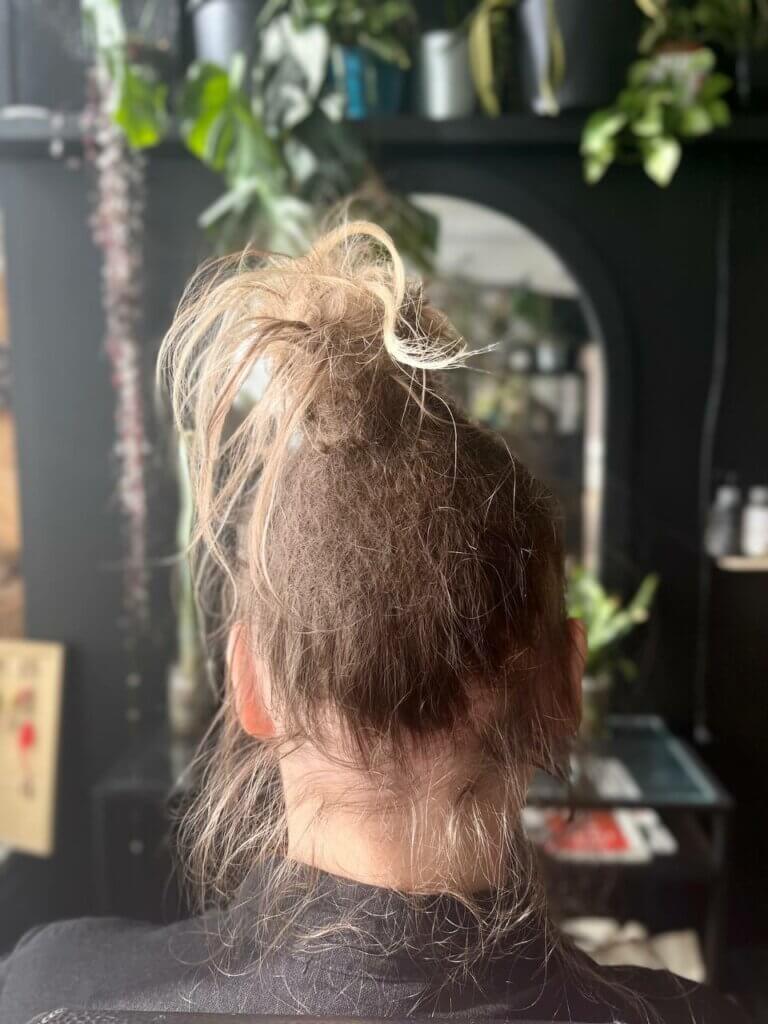
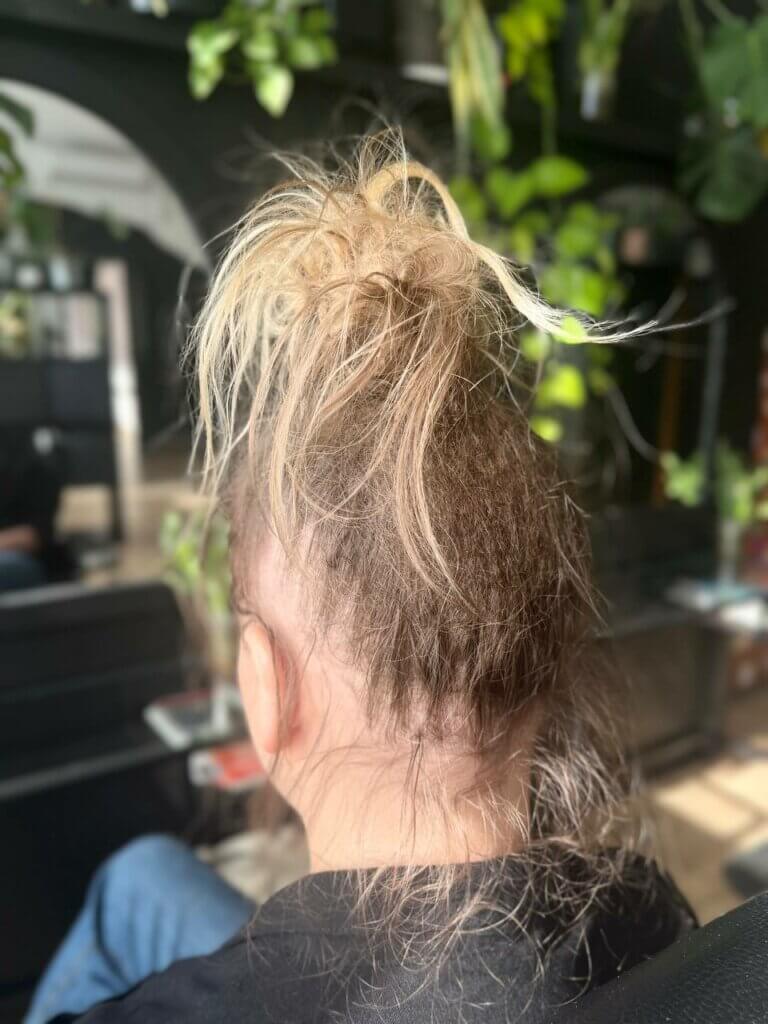
Photos from our work with matted hair