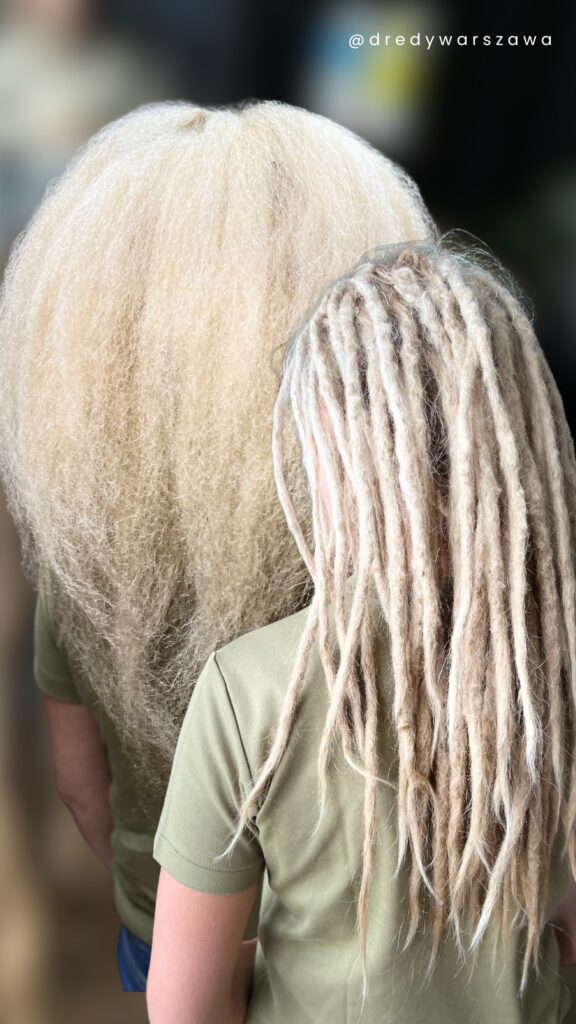
How can you remove dreads without cutting your hair? This is one of the most common questions from people who want a change after months or years of wearing dreads but do not want to cut their hair straight away.
Dreads can be part of your style, story and identity. Over time, however, you may want to return to loose hair, change your hairstyle or simply see what is left beneath the dreads after several years.
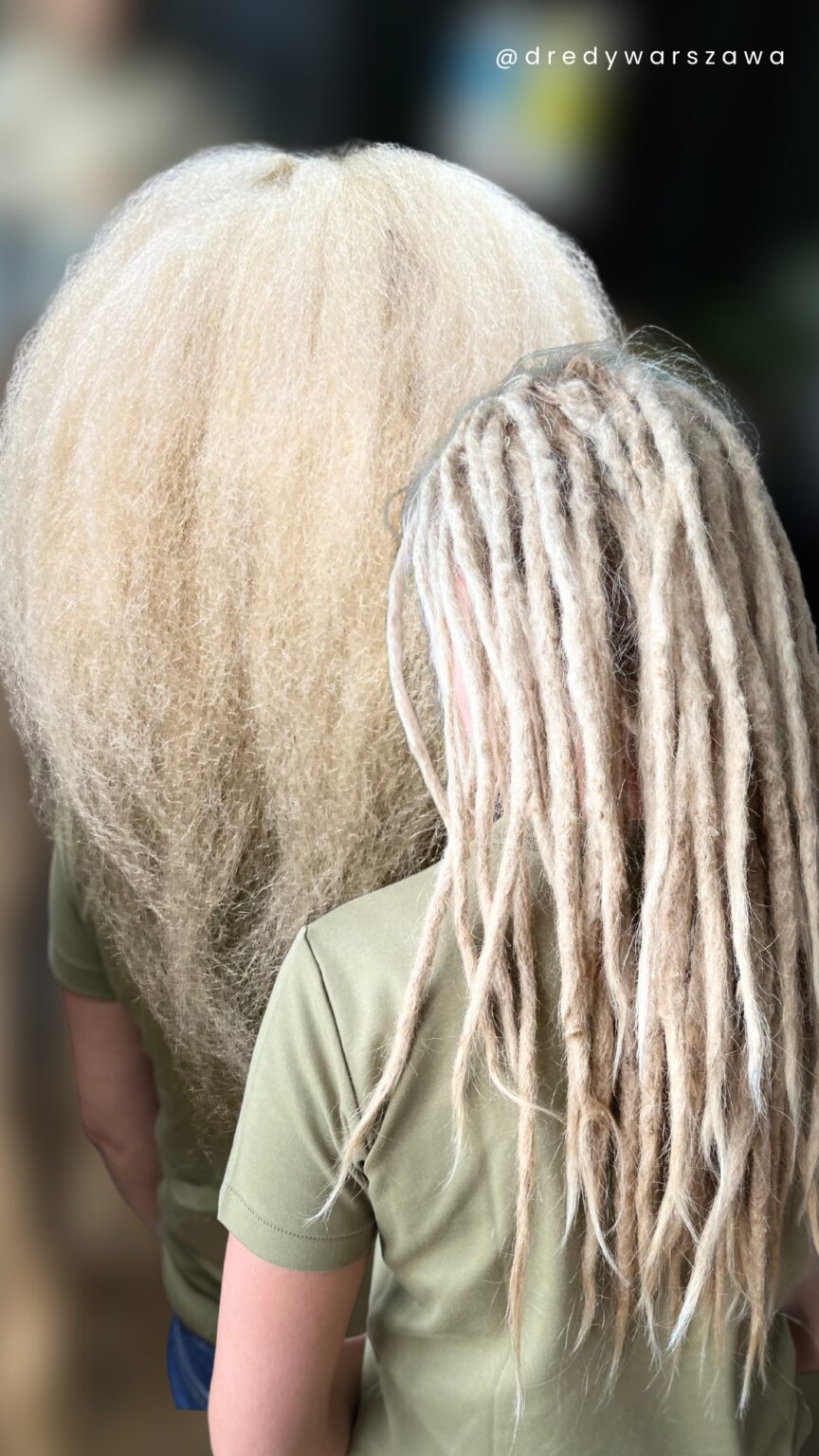
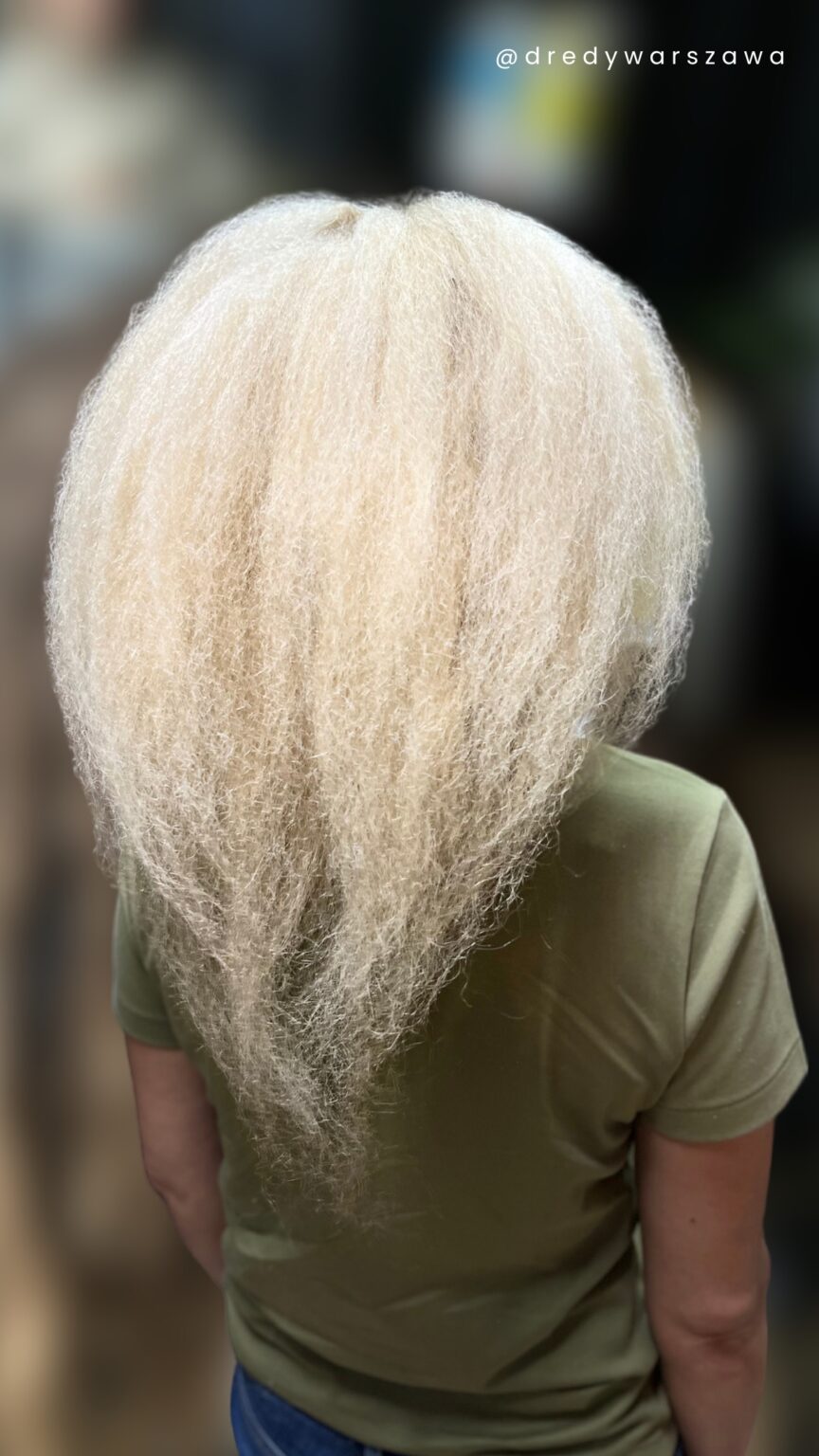
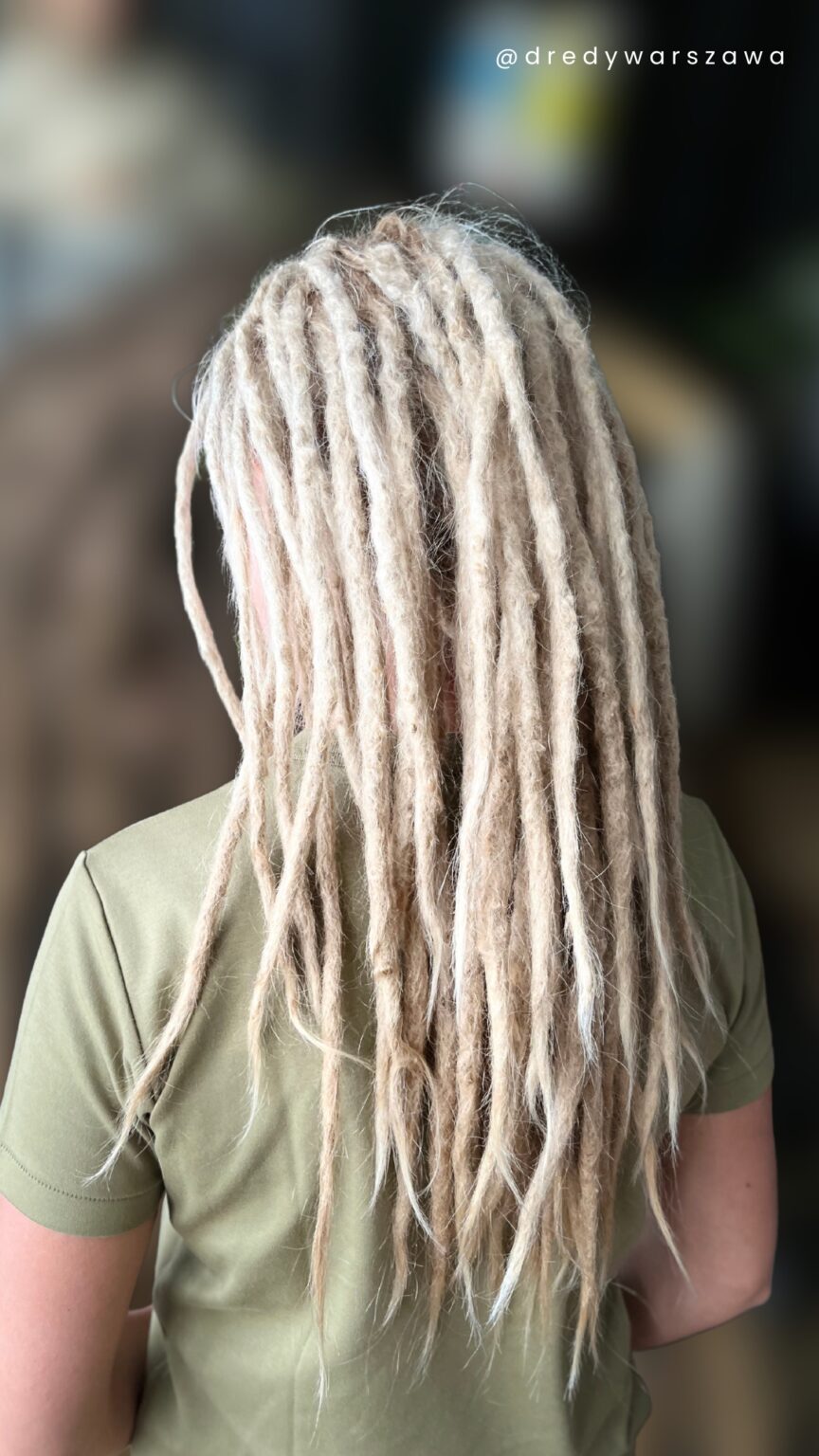
The good news is that combing out dreads without cutting your hair is possible. However, this does not mean that exactly the same hair length and condition can be preserved in every case.
The result depends on factors including the age and compactness of the dreads, hair condition, previous colouring and bleaching, and the techniques used to create and maintain them.
At FREAK SALON in Warsaw, we have been combing out dreads for years. Below, we explain what you can realistically expect and when professional combing-out is worth considering.
How can you remove dreads without cutting your hair?
A dread is not a solid 'mass’ that can no longer be separated. It is tightly tangled hair that becomes felted over time.
That is why, in many cases, the structure of a dread can gradually be loosened to recover your own hair without a drastic cut.
However, you need to be prepared for a lengthy process.
The older, denser and more felted the dreads are, the more time and precision combing them out will require.
The main factors are:
- the age and maturity of the dreads,
- their thickness and how they were made,
- the condition of the hair inside them,
- previous bleaching and other chemical treatments,
- mechanical damage,
- the care routine while wearing dreads,
- the experience of the person combing them out.
There is no single answer to how much hair can be preserved for everyone. We assess this individually.
Dreads that are several years old can also be combed out
The age of the dreads alone does not automatically mean scissors are the only option.
We have also combed out mature dreads worn for many years.
However, these dreads are usually much more compact than a style that is only a few months old. The work may therefore take many hours or require several sessions.
We do not promise a specific hair length after combing-out before we begin.
First, we examine the dreads and assess their structure and hair condition. Only then can we explain roughly what to expect.
What does combing out dreads involve?
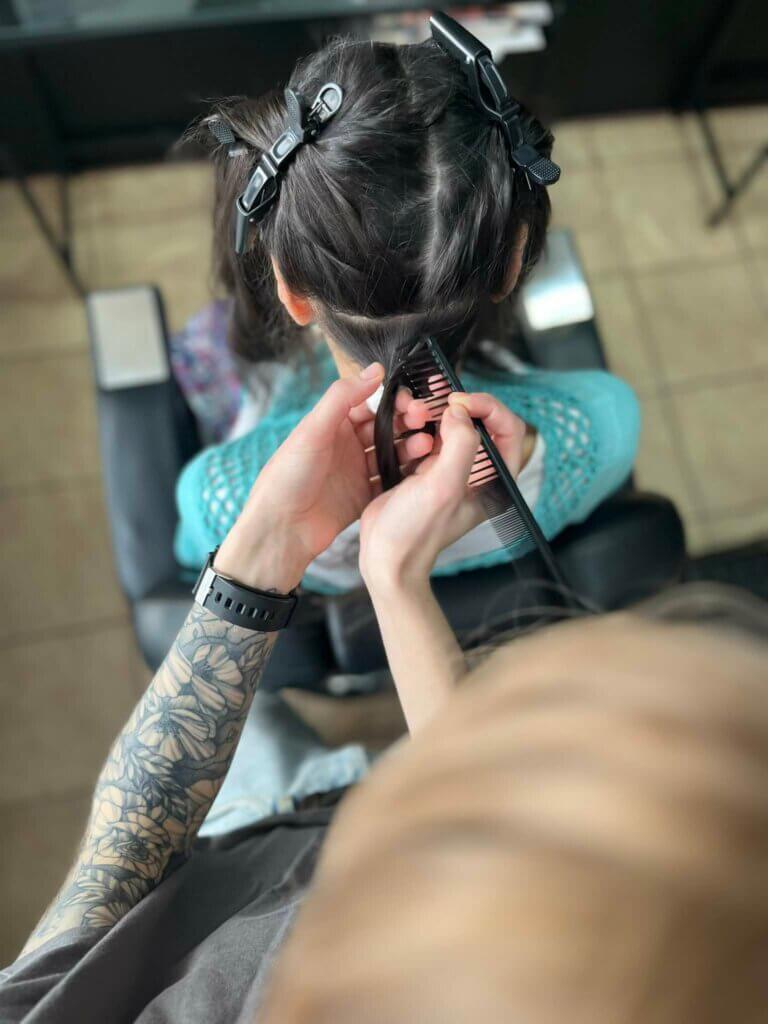
The process is gradual, working on small parts of a dread.
We start at the end and slowly move towards the roots. The structure is loosened in stages rather than pulled at in an attempt to comb out the entire dread at once.
Patience is one of the most important parts of the process.
We also remove hair that naturally shed during months or years of wearing dreads but remained trapped inside their structure.
There is no single universal product to 'soak the dreads in’ to make them suddenly untangle either. The choice of products and approach depends on the type of dread, its compactness and hair condition.
The most important thing is to limit unnecessary pulling and mechanical damage to the hair.
Why does so much hair come out during combing-out?
Seeing a large amount of hair during dread removal can be frightening.
However, remember that hair naturally sheds every day. The American Academy of Dermatology states that we lose an average of around 50 to 100 hairs per day.
With loose hair, most of these hairs fall out during washing, brushing or touching your hairstyle.
In a dread, some of this hair remains trapped inside its structure.
When a dread is combed out after several months or years, this hair may be released during a single session. The amount of hair on the comb therefore does not automatically mean it was just pulled out during the service.
However, if you notice prolonged heavy shedding, obvious thinning or scalp problems after combing-out, it is worth consulting a specialist.
How much length can be preserved after combing out dreads?
There is no honest single figure that applies to every case.
In our experience, younger dreads often allow most of the length to be preserved. With very compact dreads that are several years old, losses may be greater.
The condition of the hair before the dreads were made matters a great deal.
Hair that has been bleached repeatedly, is very dry or was already severely damaged may tolerate combing-out less well than strong, healthy hair.
That is why we ask for photos before the service and assess each case individually.
We do not promise a specific number of centimetres before seeing the hair.
Can you comb out dreads yourself at home?
Yes, especially if the dreads are new, loose and not yet heavily felted.
However, you need to allow a great deal of time and work gently.
The main challenge when combing them out yourself is technique rather than finding a 'magic product’. Trying to work quickly and force the comb through can break hair or pull it out.
For tightly compacted dreads that are several years old, help from an experienced person usually allows better control of the whole process.
If you are unsure about the condition of your dreads, you can send us photos first. You do not need to book an appointment lasting many hours straight away.
What about synthetic and wool dreadlocks?
This is a completely different situation.
If you wear synthetic dreadlock extensions, dread hair ties or other temporary extensions, there is usually no need to untangle the synthetic dread itself.
The attachment is removed to release your own hair.
After prolonged wear, your hair may be tangled at the attachment point, so it should also be combed out calmly and without pulling.
Combing out mature dreads made from your own hair is a much more time-consuming process.
Dread removal in Warsaw: why FREAK SALON?
Combing out dreads requires patience, precision and experience.
At FREAK SALON:
- we assess the dreads from current photos before your appointment,
- we explain honestly what you can expect,
- we work gradually and as gently as possible,
- we use disinfected tools and tried-and-tested products,
- we can offer COMBO with two stylists, meaning two people working at the same time,
- after your appointment, we help you choose ongoing care suited to your hair’s current condition.
If, after examining your hair, we believe partial shortening or another solution makes more sense than many hours of combing-out, we will tell you clearly.
The aim is to achieve the best possible result while keeping the strain on the hair reasonable, rather than combing it out at any cost.
Will my hair look the same as before after combing-out?
Not necessarily.
After several years in dreads, hair may have a different texture, uneven lengths and ends with varying degrees of wear.
Immediately after combing-out, it may also look very fluffy, wavy or dry.
This does not automatically mean it is damaged.
Only after combing out the entire style, washing the hair and assessing its actual condition can we sensibly decide whether it needs care alone, an end trim or a bigger hairstyle change.
Can I get dreads again after combing them out?
Yes.
However, we do not set a single mandatory break for everyone.
When you can get dreads again depends mainly on the condition of your hair after combing-out.
Strong hair in good condition is a different situation from heavily bleached, brittle or weakened hair.
First, we comb out the dreads and assess the actual condition of the hair. Only then can another style be sensibly planned.
FAQ: combing out dreads without cutting your hair
Can dreads that are 5 years old or older be combed out?
Yes. Older dreads are usually more felted, so combing them out takes longer and may require several sessions. However, the age of a dread alone does not mean cutting is the only option.
Will I lose a lot of hair during combing-out?
Combing-out also releases hair that shed naturally earlier and remained trapped inside the dread for a long time. However, the final amount of hair preserved depends on its condition and how compact the dreads are.
Can all dreads be combed out?
We cannot guarantee this without examining the particular hairstyle. Sometimes hair is so damaged, felted or weakened that partial shortening is the more sensible option.
Do the ends need cutting after combing-out?
Not always. It is best to decide after combing-out is complete and the actual condition of the hair has been assessed.
How long does combing out dreads take?
It depends on the number, length, age and compactness of the dreads. It may take a few hours, but with a large number of mature dreads the work may be spread over more than one session.
Removing dreads without cutting your hair: a summary
How can you remove dreads without cutting your hair? Above all, do not start by assuming scissors are the only solution.
In many cases, dreads can be gradually combed out while preserving much of your own hair.
However, this is not a quick trick or a service that always follows the same course. The age and structure of the dreads, hair condition and working technique matter.
If your dreads are new and loose, combing-out may be relatively straightforward. For mature, heavily felted dreads that are several years old, it is worth at least consulting someone about their condition before starting.
Want to find out whether your dreads can be combed out?
Send us current photos of your dreads from several angles. We will assess their condition, explain what to expect and estimate what the work may involve.
We offer dread removal at FREAK SALON in Warsaw.
Bookings are made following a consultation.